

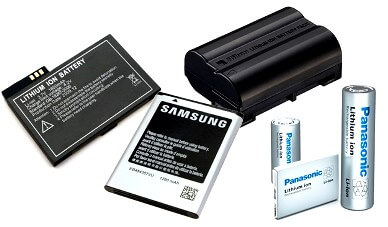
Compared to other sources of autonomous power, lithium-ion batteries are produced in relatively small volumes, but the growth of the electric vehicle fleet will swing the situation in another direction. It will take five or ten years and the amount of spent lithium-ion batteries will exceed several million tons per year. This is not only the growth of consumption of rare resources in the form of lithium, cobalt and other materials that are not infinite, it is also contamination of land and water from waste batteries. Is not it time to think about this?
Today, approximately 5% of the lithium-ion batteries that have been used up have been disposed of. This is a very small figure against the background of the expected demand for this type of battery. Scientists are faced with the task of creating a technological process for the affordable disposal of batteries or, ideally, reusing materials in new products. Such a process technology was developed in the laboratory of the University of California in San Diego (University of California San Diego). Professor Zheng Chen developed a technology for restoring the cathode material of a spent lithium-ion battery. The process technology with small modifications is equally suitable for the recovery of lithium-cobalt oxide and the combination of NMC (nickel, manganese and cobalt). In the first case we are talking about cathodes from accumulators for electronics, and in the second - about cathodes from accumulators for electric vehicles (mainly). Laboratory experiments confirmed the complete restoration of the cathode (University of California San Diego). The spent cathode, which lost most of the lithium ions and with the broken crystal lattice of the compound, is placed in an alkaline solution with lithium salts. Then a rapid and short-term heating of the mixture to 800 degrees Celsius, after which the solution slowly cools. If the cathode for the lithium-ion battery is re-created from the material that has been processed, the battery will behave as if it were made of completely new and newly produced materials. Tests in the laboratory showed that the battery with the cathode of the recovered material is in no way inferior to a battery with a cathode made of fresh raw materials.
The development of scientists kills several rabbits. Economical resources are saved, waste will not pollute the environment, and rechargeable batteries can become cheaper. The technology technology offered by Professor Zheng Chen is twice as economically involved today in the processing of cathodes. So, to restore the primary properties of the material leaves 5.9 megajoules, which is equivalent to three fourth glasses of gasoline. For the introduction of the production process, it is necessary to create an automated system for extracting cathodes from batteries, regardless of the form factor of the batteries, and to adapt laboratory operations to the industrial level. It is planned that enterprises located in Asia will be engaged in processing.


