
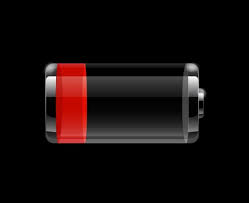
The battery is the weak point of the smartphone. Lithium-ion batteries fail over time, and they also do not like temperature changes. In addition, there are many theories about what provokes premature battery wear. We list the most common myths and explain why you should not believe them.
Myth number 1: if the charging power is above acceptable, the smartphone will fail
Charger parameters are not the only factor affecting the rate of energy replenishment. Feedback from the smartphone is also important.
To control the voltage and energy in the battery, special controllers are built into smartphones and tablets. They determine the charging speed and change it depending on the state of the battery. They do not allow an increase in voltage above the permissible during the charge, suspend the charging process upon reaching 100% and do not allow a full discharge to 0%.
Myth number 2 smartphone can not be left to charge at night
Same. The smartphone has a special controller. When the battery is charged to its limit, it stops the flow of energy so that the battery does not fail. As a result, the battery does not recharge or heat up.
Myth number 3: the battery needs to be discharged to 0%
This myth has come to us from the past when nickel metal hydride (Ni-Mh) and nickel-cadmium (Ni-Cd) batteries were installed in mobile phones. They had a “memory effect", and the capacity in them decreased as the battery was used, so manufacturers recommended fully discharging them before use.
Lithium-ion batteries are less prone to the “memory effect", so you do not need to completely discharge the battery before charging. Moreover, these batteries have a limited charge cycle life. That is, in their case, everything is exactly the opposite - a discharge of up to 0% on the contrary harms the battery and contributes to obsolescence.
Myth number 4: you can not use non-original chargers
This is partly true, but non-original chargers are different. Buying a branded power supply from the smartphone manufacturer is the most reliable solution, but non-original devices can be no worse.
It is important that charging is certified to one of the standards. Xiaomi has Quick Charge, iPhone has Power Delivery, OPPO has super VOOC. Charging the device with charging with another standard is allowed. The limitation will be only in speed - conditionally, OPPO with super VOOC support will recharge with a Xiaomi power supply with Power Delivery, the speed of energy replenishment will be slow.
You can not use cheap Chinese blocks in which just the charging standard is not specified. It is they who in most cases provoke a battery fire. In general, you can buy third-party chargers. The main thing is that they comply with quality standards.
Myth number 5: fast charging disables the battery
Scientists at the SLAC National Acceleration Laboratory have denied this myth. Battery electrodes distribute energy evenly and gradually, regardless of charging speed. The battery does not heat up above acceptable levels. If the maximum level is exceeded, the device will turn off.
Myth # 6: closing background applications increases uptime
The logic is this: the more applications openly, the more energy is consumed. In fact, the system independently optimizes power consumption and memory consumption - it unloads unnecessary applications from multitasking, and their work is partially suspended.
Multitasking appeared in the iPhone 4 in 2010. Then, users had a lot of questions about its work. One of them Steve Jobs answered by email.
- People have nothing to figure out how multitasking works. Just use it as intended, and you will be happy. There is no need to exit applications, - the founder of Apple answered.
Myth # 7: you need to restart your smartphone more often to extend its life
The process of rebooting the smartphone does not affect the battery life. It works even when the battery is off. Rebooting positively affects the operation of the operating system, and the duration of the battery depends on the number of charge / discharge cycles.
 |
|||||||||
|
Catalog
Survey Вы покупаете через интернет?
|
Заказы на сайте принимаются только в электронном виде
Myths about the operation of batteries, should they be believed or not !?
|
||||||||
|
Recommended reading

Articles
|


Currency:
Blog / News
Language


| Нас посещают: |